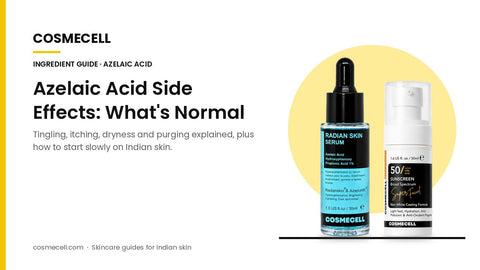
Quick answer: the most common azelaic acid side effects are mild, short-lived tingling or itching for a few minutes after applying, some dryness or light flaking in the first weeks, and occasionally a few small breakouts as skin adjusts. Cosmecell's advice: start every other night on dry skin, use a pea-sized amount, buffer with moisturiser if needed, and wear SPF 50 PA++++ every morning. Stinging that lasts, swelling, hives or a spreading rash are not normal — stop and see a dermatologist.
Azelaic acid is one of the most searched actives in India for the look of dark spots, acne marks and uneven tone, and our azelaic acid timeline guide is one of the most-read guides on this blog. The next question we get is always the same: "it tingles — is that normal?" This guide from Cosmecell explains which reactions are expected, which are not, and how to adjust your routine so you can keep going comfortably. Appearance wording only; this is cosmetic information, not medical advice.
Normal vs not normal: the Cosmecell side-effect table
| What you notice | Usually normal? | What to do |
|---|---|---|
| Mild tingling or warmth for a few minutes after applying | Yes — very common in the first 1–3 weeks | Apply on fully dry skin; use less; try every other night |
| Light itch that fades quickly | Yes, if short-lived | Do not scratch; buffer with moisturiser first |
| Dryness, tightness or fine flaking around nose and chin | Common early on | Cut back frequency; add a richer moisturiser; skip scrubs |
| A few small bumps in usual breakout areas | Sometimes — can be adjustment (purging) | Keep the routine simple; give it a few weeks; do not pick |
| Redness that lasts hours, burning, swelling | No | Stop; rinse with cool water; see a dermatologist |
| Hives, spreading rash, eye or lip swelling | No | Stop immediately and seek medical care |
Why azelaic acid can tingle
Azelaic acid is a mild dicarboxylic acid. On freshly washed or damp skin, or where the skin barrier already feels stressed (after scrubbing, sun, shaving or winter dryness), it can produce a brief prickly or itchy feeling. For most people this fades within minutes and becomes less noticeable over the first few weeks of regular use. That is very different from contact irritation, which tends to persist, look red and get worse each time.
Indian skin has one extra reason to go slowly: irritation can leave behind darker-looking marks on medium and deeper skin tones. So the goal is not to "push through" discomfort — it is to stay in the comfortable zone where skin keeps improving in appearance.
How to start azelaic acid without side effects
- Patch test first. Apply a small amount behind the ear or along the jaw for a few days.
- Start every other night. Move to nightly once skin feels settled, usually after two to three weeks.
- Apply on dry skin. Wait a few minutes after cleansing; damp skin increases penetration and tingle.
- Use a pea-sized amount for the whole face. More product does not mean faster results.
- Buffer if needed. A thin layer of moisturiser before and after (the moisturiser sandwich) softens the feel.
- Keep the rest simple. A gentle cleanser, moisturiser and daily SPF; pause scrubs and other strong acids at first.
Full routine steps and layering order are in how to use azelaic acid serum.
What not to combine in the first few weeks
| Combination | Why it can sting | Cosmecell suggestion |
|---|---|---|
| Azelaic + glycolic or salicylic leave-on serum, same night | Too much exfoliation at once (over-exfoliation) | Alternate nights, or keep acids to a rinse-off cleanser |
| Azelaic + retinol, same night (beginners) | Both can cause dryness early on | Alternate nights once each is tolerated alone |
| Azelaic + physical scrub | Scrubs leave micro-roughness that stings | Skip scrubs entirely |
| Azelaic in AM without SPF | Sun undoes progress on dark spots | Always finish mornings with SPF 50 PA++++ |
Vitamin C in the morning and azelaic acid at night is a well-tolerated split for many people — see azelaic acid vs vitamin C and the dark-spot routine order.
Where Cosmecell Radiant Skin Serum fits
The Cosmecell Radiant Skin Serum combines azelaic acid with 1% HPPA and hyaluronic acid, and it is dermatologically tested. The hyaluronic acid helps with a more comfortable feel, but the same starting rules apply: every other night on dry skin, a pea-sized amount, and SPF every morning. With consistent use, uneven-looking tone and post-blemish marks can look softer over a few weeks; results vary by skin. You can also browse the skin tone correction collection and, for breakout-prone skin, the blemish-prone skin care collection.
If your skin feels tight, pair it with a barrier-friendly moisturiser from the skin barrier repair collection and a gentle cleanser such as the Gentle Glycolic Cleanser only a few times a week, not daily, while you are adjusting.
Azelaic acid vs other dark-spot actives: irritation at a glance
| Active | Typical early feel | Notes for Indian skin |
|---|---|---|
| Azelaic acid | Brief tingle or itch | Often suits sensitive and breakout-prone skin once started slowly |
| Vitamin C (ascorbic acid) | Tingle on application, especially at higher strengths | Morning use under SPF; see vitamin C side effects |
| Glycolic acid (leave-on) | Sting, possible redness | Rinse-off formats are gentler starting points |
| Alpha arbutin / tranexamic acid | Usually very little | Compare in tranexamic acid vs azelaic acid |
When to stop and see a dermatologist
- Burning or stinging that lasts longer than a few minutes, every time you apply.
- Redness, swelling or rash that spreads beyond where you applied.
- Any swelling of the eyes, lips or face, or hives.
- Skin that keeps getting worse after two to three weeks of reduced frequency.
Cosmetics are not medical care. If you are pregnant, breastfeeding or using prescription skincare, check with your doctor before adding new actives. Look up any term in the skincare ingredient glossary.
Frequently asked questions
Is it normal for azelaic acid to tingle or itch?
Yes, mild tingling or itching for a few minutes after applying is common in the first weeks, especially on damp or freshly washed skin. Apply on fully dry skin, use a pea-sized amount and start every other night. Stinging that lasts or comes with swelling is not normal.
Does azelaic acid cause purging?
Some people notice a few small bumps in their usual breakout areas during the first weeks, which can be adjustment. Keep the routine simple and avoid picking. New breakouts in unusual areas, or a rash, are more likely irritation, so stop and reassess.
How do I reduce azelaic acid dryness and flaking?
Cut back to every other night, apply a thin layer of moisturiser before and after the serum, skip scrubs and other strong acids, and use lukewarm water. Most dryness settles over the first few weeks as skin adjusts.
Can I use azelaic acid every day?
Many people move to nightly use after two to three weeks of every-other-night use once skin feels comfortable. Always wear a broad-spectrum SPF 50 PA++++ in the morning, because sun exposure works against progress on dark spots.
Is Cosmecell Radiant Skin Serum suitable for sensitive skin?
Radiant Skin Serum (azelaic acid + 1% HPPA + hyaluronic acid) is dermatologically tested. Sensitive skin should patch test first and start every other night on dry skin. Results vary by skin and show gradually over a few weeks.
When should I stop using azelaic acid?
Stop and see a dermatologist if you get burning that lasts, swelling, hives, a spreading rash, or skin that keeps getting worse after reducing frequency. Mild, short tingling that fades is not a reason to stop.
Is the Cosmecell range vegetarian?
Yes. The Cosmecell range is fully vegetarian.
This guide is for general cosmetic skincare information and is not medical advice. Patch test new products. For persistent, spreading or painful skin concerns, see a dermatologist.