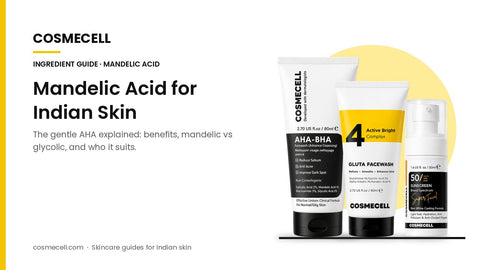
Quick answer: mandelic acid is a gentle alpha hydroxy acid (AHA) with a larger molecule than glycolic acid, so it works more slowly on the skin surface and usually feels milder. That makes it a popular first exfoliant for Indian skin that is sensitive, breakout-prone or quick to leave dark marks. It helps skin look smoother and brighter and pores look clearer over a few weeks of regular use; results vary by skin. Cosmecell uses mandelic acid 1% in two rinse-off face washes, always alongside daily SPF.
Mandelic acid has become a trending ingredient on Indian skincare Instagram as people look for "gentler glycolic". This Cosmecell guide explains what it is, how it compares with glycolic, lactobionic and salicylic acid, who it suits, and how to use it without overdoing exfoliation. Appearance wording only; this is cosmetic information, not medical advice.
What is mandelic acid?
Mandelic acid is an AHA originally derived from bitter almonds. Like other AHAs it loosens the bonds between dead surface cells (chemical exfoliation), which helps dull, rough-feeling skin look smoother and more even. The key difference is size: mandelic acid's molecule is roughly twice as large as glycolic acid's, so it penetrates more slowly and evenly. In practice that usually means less sting and redness for the same goal of brighter-looking skin.
Mandelic vs glycolic vs lactobionic vs salicylic
| Acid | Type | Molecule size | Usual feel | Best known for |
|---|---|---|---|---|
| Mandelic acid | AHA | Large | Gentle, slow | Sensitive or mark-prone skin wanting smoother, brighter-looking texture |
| Glycolic acid | AHA | Smallest | Fastest, can sting | Dullness and rough texture; see how to use glycolic acid |
| Lactobionic acid | PHA | Very large | Very gentle, hydrating | Comfort and hydration alongside AHAs |
| Salicylic acid | BHA | Small, oil-soluble | Can dry if overused | Oily skin, blackheads, clogged-looking pores |
For the full glycolic vs salicylic decision, read glycolic acid vs salicylic acid; for BHA basics see BHA vs AHA.
Mandelic acid benefits for Indian skin
- Gentler exfoliation: slower penetration usually means less tingling, which matters for skin that darkens after irritation (post-inflammatory hyperpigmentation).
- Brighter-looking skin: regular surface exfoliation helps with the look of dullness and uneven tone over a few weeks.
- Clearer-looking pores: paired with salicylic acid, it supports a smoother, less congested look on oily and combination skin.
- Works in rinse-off formats: a face wash keeps contact time short, which is a sensible way to start.
Cosmecell face washes with mandelic acid
| Cosmecell product | Key actives | Suits |
|---|---|---|
| AHA BHA Salicylic Face Wash | Salicylic acid 2% + glycolic acid 3% + mandelic acid 1% + niacinamide 3% | Oily, congestion-prone and breakout-prone skin |
| Glutathione Brightening Face Wash | Glutathione 1% + glycolic acid 3% + alpha arbutin 1% + mandelic acid 1% | Dull-looking skin and uneven-looking tone |
| Gentle Glycolic Cleanser (no mandelic) | Glycolic acid 5% + lactobionic acid 2% + sugar cane | Normal to dry skin wanting a smoother feel |
Pick one acid face wash per routine, not two. Browse the blemish-prone skin care collection, the de-tan face care collection and the dullness collection to compare.
How to use mandelic acid
- Patch test on the jawline for a few days.
- Start with a rinse-off product three or four times a week, then daily if skin stays comfortable.
- Massage for 30–60 seconds and rinse with lukewarm water. Longer contact is not better.
- Moisturise straight after, especially in dry winter weather.
- Wear SPF every morning. AHAs can increase sun sensitivity; finish with Cosmecell SPF 50 PA++++.
If you already use a leave-on serum such as Radiant Skin Serum (azelaic acid + 1% HPPA; dermatologically tested) or Salicylic Acid Serum 2%, keep your face wash gentle on those nights and watch for over-exfoliation: tightness, stinging or shiny, papery skin. Vitamin C fits best in the morning; see vitamin C morning or night.
Who should be careful
- Very dry, flaking or freshly sunburnt skin: pause acids until skin feels comfortable.
- Anyone using prescription skincare, or who is pregnant or breastfeeding: check with your doctor first.
- People hoping for one-week results: exfoliation shows gradually, over a few weeks, and results vary by skin.
- Professional mandelic or multi-acid peels are for clinics only. Cosmecell's nano-encapsulation peels are professional-use only — never a home product.
Look up any ingredient in the skincare ingredient glossary, and read glycolic acid for sensitive skin if you are deciding between the two AHAs.
Frequently asked questions
What does mandelic acid do for skin?
Mandelic acid is a gentle AHA that loosens dead surface cells, helping skin look smoother, brighter and more even over a few weeks of regular use. Its larger molecule works more slowly than glycolic acid, so it usually feels milder.
Is mandelic acid better than glycolic acid for Indian skin?
Not better, but often gentler. Mandelic acid suits sensitive or mark-prone skin that stings with glycolic acid. Glycolic acid works faster on dullness and rough texture. Many people start with a rinse-off mandelic or glycolic face wash and see how skin responds.
Can I use mandelic acid every day?
In a rinse-off face wash, many people can use it daily once skin is comfortable. Start three or four times a week, moisturise afterwards and wear SPF 50 PA++++ every morning.
Which Cosmecell products contain mandelic acid?
The Cosmecell AHA BHA Salicylic Face Wash (salicylic acid 2% + glycolic acid 3% + mandelic acid 1% + niacinamide 3%) and the Glutathione Brightening Face Wash (glutathione 1% + glycolic acid 3% + alpha arbutin 1% + mandelic acid 1%).
Can I use mandelic acid with azelaic acid or salicylic acid?
Yes, carefully. A rinse-off mandelic face wash with an azelaic or salicylic serum at night works for many people, but if skin feels tight or stings, reduce frequency. Avoid stacking several leave-on acids at once.
Does mandelic acid make skin sun-sensitive?
AHAs can increase sun sensitivity, so daily broad-spectrum SPF 50 PA++++ is essential, including on cloudy days and indoors near windows.
Is the Cosmecell range vegetarian?
Yes. The Cosmecell range is fully vegetarian.
This guide is for general cosmetic skincare information and is not medical advice. Patch test new products. For persistent, spreading or painful skin concerns, see a dermatologist.