Quick answer: combination skin usually means an oily T-zone (forehead, nose, chin) with normal or dry cheeks. The simplest routine treats the face as two zones: a gentle cleanser for the whole face, a light hydrating layer everywhere, a pore-focused active such as 2% salicylic acid only on the oily areas, a little extra moisturiser on the cheeks, and broad-spectrum SPF 50 every morning. In humid Indian summers, go lighter; in dry winters, add more moisture to the cheeks and pull back on exfoliation.
If your nose looks shiny by lunch but your cheeks feel tight after washing, you are not imagining it. Combination skin is one of the most common skin types in India, and it is confusing because products made for "oily skin" can dry out your cheeks while "dry skin" creams can feel heavy on your forehead. This Cosmecell guide gives you a simple AM/PM routine, explains how to adjust it for Indian seasons and cities, and lists the mistakes that make combination skin harder to manage. Cosmetic information only, not medical advice.
How to know if you have combination skin
Try this at home: wash your face with a mild cleanser, pat dry, apply nothing, and wait about an hour. Then press a tissue on your forehead, nose, chin and cheeks.
| What you notice | Likely skin type |
|---|---|
| Oil on the T-zone, cheeks feel normal or tight | Combination |
| Oil on every area, including cheeks | Oily |
| No oil anywhere, skin feels tight or flaky | Dry |
| Little oil, skin feels comfortable | Normal |
Cleveland Clinic describes combination skin as oilier in the T-zone (forehead, nose and chin) while the rest of the face feels drier, and notes the pattern can occasionally be reversed (Cleveland Clinic). The T-zone has more oil glands, which is why it gets shinier first. Skin type can shift with season, hormones and climate, so recheck in summer and winter.
The combination-skin rule: treat zones, not your whole face
The biggest shift is to stop choosing one product for one "type". Use gentle basics everywhere and place targeted steps only where they are needed:
- Whole face: mild cleanser, light hydrating serum or gel moisturiser, sunscreen.
- T-zone only: a pore-focused active such as salicylic acid, a few times a week to daily as tolerated.
- Cheeks only: an extra thin layer of a richer moisturiser when they feel tight, especially in winter or in air-conditioned offices.
Morning routine for combination skin (India)
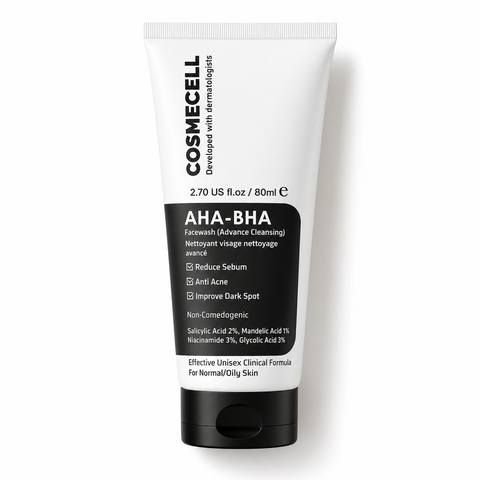
- Cleanse. Use a gentle gel cleanser. If your T-zone gets very oily or you see blackheads, an acid face wash such as the Cosmecell AHA BHA Face Wash (2% salicylic acid, 3% glycolic acid, 1% mandelic acid, 3% niacinamide) suits oily and combination skin. Massage it on the T-zone a little longer and keep contact on the cheeks brief. Sensitive cheeks? Use it once a day, not twice.
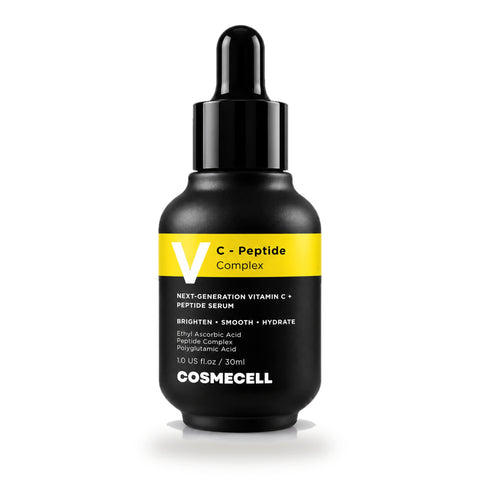
- Optional antioxidant serum. A light vitamin C serum can support a brighter look. Skip it on days your skin feels irritated.
- Moisturise. A lightweight gel or lotion over the whole face. Add a second thin layer on the cheeks if they feel tight.
- Sunscreen. Finish with a broad-spectrum, non-greasy SPF 50 such as the Cosmecell SPF 50 PA++++ Sunscreen, which has no white cast. Use about two finger-lengths for face and neck and apply before you step out.
Night routine for combination skin
- Cleanse. Remove sunscreen, sweat and pollution. If you wore heavy makeup or water-resistant sunscreen, our double cleansing guide explains when a first oil or balm cleanse helps.
- Targeted active on the T-zone. Apply 2 to 3 drops of a water-based serum such as the Cosmecell Salicylic Acid Serum 2% (with 1% zinc PCA and 1% niacinamide) to the forehead, nose and chin. Start every other night, then increase if your skin is comfortable. If you already use the acid face wash, choose the serum or the wash at night, not both, while your skin adjusts.
- Moisturise. Light layer everywhere, a little more on dry cheeks.
Keep other strong exfoliants or retinoids on separate nights from salicylic acid. Our skin cycling guide shows how to rotate actives.
Adjusting for Indian seasons and cities
| Situation | What to change |
|---|---|
| Humid summer and monsoon (Mumbai, Chennai, Kolkata) | Gel moisturiser only; salicylic acid can go up to daily on the T-zone if tolerated; blot rather than re-wash |
| Dry winter (Delhi NCR, Punjab, Lucknow) | Richer cream on cheeks; cut acids to 2 to 3 nights a week; lukewarm water only |
| Long hours in AC | Add a hydrating serum under moisturiser; keep cheeks moisturised |
| Hard water areas (Bengaluru, parts of Rajasthan) | Gentler cleanser, shorter washes and moisturise straight after; see our hard water guide |
| Pollution-heavy days | Thorough evening cleanse; daily sunscreen; avoid scrubbing |
Common combination-skin mistakes
- Using harsh oil-control products all over. Strong cleansers and alcohol-heavy toners can dry the cheeks and leave the T-zone looking oilier.
- Skipping moisturiser because you are oily. Even an oily T-zone needs some water-based hydration.
- Washing the face too often. Twice a day is enough for most people. Blotting paper handles midday shine.
- Layering many acids at once. A salicylic face wash plus a salicylic serum plus a glycolic toner is a lot. Pick one or two.
- Skipping sunscreen. Sun exposure can make marks and uneven tone look stronger on every zone.
Frequently asked questions
What is the best routine for combination skin in India?
A gentle cleanser, a light moisturiser and SPF 50 in the morning; at night, cleanse, use a pore-focused active such as 2% salicylic acid on the T-zone, then moisturise. Add extra moisturiser on the cheeks when they feel dry.
Is salicylic acid good for combination skin?
Yes, when used on the oily areas. Salicylic acid is oil-soluble and helps unclog pores, so it suits the T-zone. Apply it only where you need it and start every other day.
Should combination skin use a gel or cream moisturiser?
Many people use a gel or light lotion all over and a thin layer of cream on dry cheeks. In humid months a gel alone is often enough; in winter the cheeks usually need more.
Can combination skin change with the season?
Yes. In Indian summers and monsoon the T-zone usually gets oilier, while winter dryness can make the cheeks feel tight. Adjust the routine rather than switching products every week.
How often should combination skin exfoliate?
Most people do well with a chemical exfoliant 2 to 4 times a week on the T-zone, increasing slowly. Reduce frequency if you notice stinging, redness or flaking.
Ready to build your routine? Start with the basics: the AHA BHA Face Wash (₹485) or a gentle cleanser, the Salicylic Acid Serum 2% (₹480) for the T-zone, and SPF 50 PA++++ (₹650) every morning. Patch test each new product and introduce one at a time.
This guide is general cosmetic skincare information and is not medical advice. Patch test new products. For persistent, spreading or painful skin concerns, see a dermatologist.