Quick answer: L-ascorbic acid (pure vitamin C) is the most studied form, but it oxidises easily and works best in a very acidic formula, which some skin finds tingly. 3-O-ethyl ascorbic acid (often written "ethyl ascorbic acid") is a vitamin C derivative with a small chemical shield that makes it more stable in water-based serums and usually gentler to wear. If your skin tolerates acids well and you want a well-researched classic, ascorbic acid is a good pick. If you are new to vitamin C, have sensitive-feeling skin or hate a serum that turns orange in Indian heat, a stable derivative such as ethyl ascorbic acid is often the easier daily habit. Either way, sunscreen is non-negotiable.
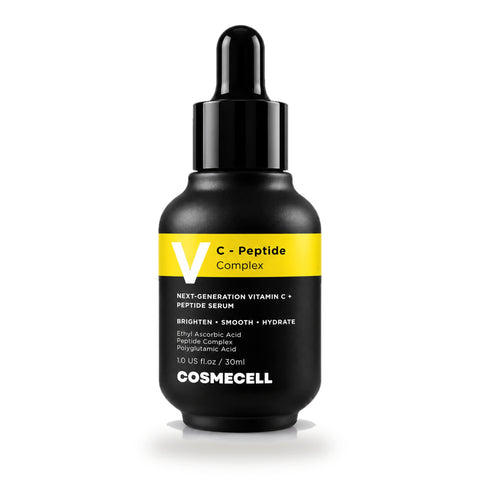
Walk down any skincare aisle in India and you will see "10% vitamin C", "20% vitamin C" and "stable vitamin C" on the label, often without saying which vitamin C is inside. That matters, because the form decides how the serum feels, how long it lasts on your shelf and how you should use it. This Cosmecell guide compares the two forms we use, ascorbic acid in our Vitamin C Serum 12% and 3-O-ethyl ascorbic acid in our VC-Peptide Complex serum, in plain language. This is cosmetic information, not medical advice.
What is L-ascorbic acid?
L-ascorbic acid is vitamin C in its pure, active form. It is a water-soluble antioxidant and the form with the deepest research base in skincare. A review in the Indian Dermatology Online Journal (Telang, 2013) describes its role as an antioxidant and its use in products aimed at dullness and uneven-looking tone.
The catch is chemistry. Ascorbic acid reacts easily with oxygen, light and heat, and as it oxidises the serum can turn yellow, then orange or brown. Early percutaneous absorption work by Pinnell and colleagues (Dermatologic Surgery, 2001) found that ascorbic acid needed a low pH, below about 3.5, to pass into skin well. That acidity is why some people feel tingling when they start a pure vitamin C serum.
What is 3-O-ethyl ascorbic acid?
3-O-ethyl ascorbic acid is ascorbic acid with an ethyl group attached at the third carbon. That position is exactly where pure vitamin C tends to break down. Researchers at UCL School of Pharmacy explain that the ethyl group protects this part of the molecule from ionisation and oxidation, which is the basis for its better stability (Iliopoulos et al., International Journal of Pharmaceutics: X, 2019). The same study showed it can pass into skin from common cosmetic solvents such as glycerin and propylene glycol.
A separate laboratory comparison found the ethylated form more stable in water than ascorbic acid and with longer-lasting antioxidant activity in a standard test (Golonka et al., Biological and Pharmaceutical Bulletin, 2017). To be fair about the evidence: there is far less long-term human research on ethyl ascorbic acid than on pure vitamin C, so "stable" should not be read as "stronger".
Ethyl ascorbic acid vs ascorbic acid: side-by-side
| Factor | L-ascorbic acid | 3-O-ethyl ascorbic acid |
|---|---|---|
| What it is | Pure vitamin C | Vitamin C derivative with an ethyl "shield" |
| Research depth | Most studied form | Growing, but fewer human studies |
| Stability in water serums | Lower; oxidises with air, light and heat | Higher; resists colour change |
| Formula pH | Usually very acidic | Can sit at a milder pH |
| Common feel | Can tingle at first | Usually comfortable |
| Colour change | May turn yellow to orange over time | Tends to stay clear longer |
| Best for | Vitamin C regulars, tolerant skin | Beginners, sensitive-feeling skin, hot climates |
| Cosmecell example | Vitamin C Serum 12% (with 2% alpha arbutin, 1% polyglutamic acid) | VC-Peptide Complex (with peptides and polyglutamic acid) |
Why the form matters more in India
Heat speeds up oxidation
Bathrooms in Chennai or Kolkata can sit above 30°C for months, and a bottle near a sunny window gets even warmer. Heat and light speed up how fast ascorbic acid breaks down. If you choose pure vitamin C, keep the cap tight, store it away from the shower and direct sun, and finish the bottle within the time on the pack.
Humidity and texture
In humid weather, many people prefer a watery, non-sticky serum. Both forms can be made light; the bigger texture factor is the base. Our VC-Peptide serum is water-based, oil-free and fragrance free, which suits oily and combination skin on muggy days.
Sensitive-feeling skin and dry winters
Dry North Indian winters and pollution can leave skin feeling reactive. If a pure vitamin C serum tingles more than you like, a stable derivative is a sensible swap rather than giving up on vitamin C. See our guide on vitamin C serum side effects for what is normal.
Which one should you choose?
- Choose ascorbic acid if you have used vitamin C before without irritation, want the most researched form, and will store and finish the bottle carefully. The Cosmecell Vitamin C Serum 12% (₹610) adds alpha arbutin for the look of uneven tone.
- Choose ethyl ascorbic acid if you are a beginner, your skin feels sensitive, or your previous serum kept turning orange. The Cosmecell VC-Peptide Complex (₹1,450) pairs it with palmitoyl tripeptide-1, palmitoyl tetrapeptide-7 and polyglutamic acid for a brighter-looking, smoother, hydrated feel.
- Do not use both in the same routine. One vitamin C step is enough.
How to use either form
- Patch test first. Apply a little on the inner arm or behind the ear for 24 to 48 hours.
- Cleanse and pat skin dry.
- Apply 2 to 3 drops to face and neck, ideally in the morning.
- Moisturise, then finish with a broad-spectrum SPF 50 PA++++ sunscreen. Vitamin C supports a brighter look; it does not replace sunscreen.
- Keep strong exfoliants or retinoids for night, especially while your skin adjusts. Our morning or night guide and vitamin C and niacinamide layering guide cover pairings.
Give any vitamin C serum several weeks of daily use with sunscreen before judging results; changes in the look of dullness are gradual and vary by skin.
How to tell if your vitamin C has oxidised
- The serum has turned noticeably darker orange or brown.
- It smells different from when you opened it.
- It leaves an orange tint on your fingers or skin.
A slight colour shift near the end of the bottle can be normal for ascorbic acid, but a dark brown serum is past its best. Store it cool and closed, and do not decant it into clear bottles.
Frequently asked questions
Is ethyl ascorbic acid better than ascorbic acid?
Not better, different. Ethyl ascorbic acid is more stable and usually gentler to wear. Ascorbic acid has more research behind it. The better choice is the one your skin tolerates and you use every day with sunscreen.
Is ethyl ascorbic acid real vitamin C?
It is a derivative of vitamin C, meaning ascorbic acid with a small chemical change for stability. It is not identical to pure ascorbic acid, which is why labels list it by its own name.
Which vitamin C form suits sensitive skin?
Many people with sensitive-feeling skin find stable derivatives such as 3-O-ethyl ascorbic acid more comfortable than pure, low-pH ascorbic acid. Patch test either form and start with once-daily use.
Can I use vitamin C serum in Indian summer?
Yes. Choose a light, water-based texture, apply in the morning under moisturiser and sunscreen, and store the bottle away from heat and direct sunlight.
Why did my vitamin C serum turn orange?
Pure ascorbic acid oxidises with air, light and heat, and the colour change is a sign of that. Stable derivatives resist this better. A dark brown serum should be replaced.
Not sure which suits you? Start with your skin's comfort: tolerant skin can enjoy the Vitamin C Serum 12%, while beginners and sensitive-feeling skin may prefer the VC-Peptide Complex. Pair either with daily SPF 50.
This guide is general cosmetic skincare information and is not medical advice. Patch test new products. For persistent, spreading or painful skin concerns, see a dermatologist.