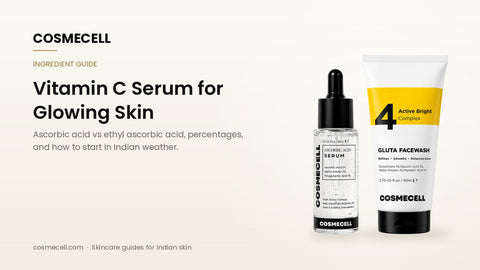
Quick answer: for most Indian skin, a vitamin C serum used every morning under SPF 50 is one of the simplest ways to get a brighter, more radiant-looking complexion and help tan and dark spots look less noticeable. Choose pure ascorbic acid (around 10 to 15%) if your skin is used to actives and you want a classic, strong brightener. Choose a stable derivative such as ethyl ascorbic acid if your skin is sensitive, you are new to vitamin C, or you want a formula that holds up better in heat. Start every other morning, then build up.
Searches for vitamin C serums in India have grown many times over in the last couple of years, and the shelf is full of numbers: 10%, 15%, 20%, "stable", "encapsulated". This guide cuts through the labels so you can pick the right type and strength for your skin and the Indian climate.
What vitamin C does in skincare
- Brightens: helps dull, tired-looking skin look more radiant.
- Evens tone: helps dark spots, tan and uneven tone look less noticeable over time.
- Antioxidant support: helps skin cope with daily pollution and sun exposure, alongside sunscreen.
- Smoother look: with steady use, skin can look smoother and fresher.
Vitamin C works best as a morning step under sunscreen. It does not replace SPF.
Ascorbic acid vs ethyl ascorbic acid vs other derivatives
| Form | Strength | Stability | Feel | Best for |
|---|---|---|---|---|
| L-ascorbic acid (pure vitamin C) | Strongest, most studied | Sensitive to air, light and heat; can turn yellow or brown | Can tingle | Skin used to actives; a classic brightening step |
| Ethyl ascorbic acid | Strong, well-regarded derivative | Much more stable | Usually gentle | Sensitive skin, beginners, hot climates |
| Sodium ascorbyl phosphate / magnesium ascorbyl phosphate | Gentler | Stable | Gentle | Very sensitive skin; oily skin |
| Tetrahexyldecyl ascorbate | Oil-soluble | Stable | Richer feel | Dry skin |
Which strength should you choose?
| Percentage | Who it suits |
|---|---|
| 5 to 10% | Beginners, sensitive skin |
| 10 to 15% | The everyday sweet spot for most skin types |
| 15 to 20% | Experienced users; higher chance of tingling |
| Above 20% | Rarely needed; more irritation without proportionally better results |
A higher number is not automatically better. A well-formulated, stable serum at a comfortable strength that you use every day will usually beat a very strong one you can only tolerate twice a week.
Cosmecell's two vitamin C serums, compared
| Vitamin C Serum 12% | VC-Peptide Complex | |
|---|---|---|
| Vitamin C form | 12% ascorbic acid | Ethyl ascorbic acid (stable derivative) |
| Partner actives | 2% alpha arbutin, 1% polyglutamic acid | Peptide complex, polyglutamic acid |
| Best for | Dark spots, tan and dullness | Glow and smoother-looking skin; sensitive or first-time users |
| Size and price | 30 ml, ₹610 | 30 ml, ₹1,450 |
The VC-Peptide Complex is dermatologically tested. If your main goal is fading the look of tan and dark spots on a budget, the Vitamin C Serum 12% with alpha arbutin is a strong pick. If you want a gentler, more stable everyday glow serum with peptides, choose the VC-Peptide Complex.
How to use vitamin C serum, step by step
- Cleanse with a gentle face wash. If you want an extra brightening boost, the Glutathione Brightening Face Wash (1% glutathione, 3% glycolic acid, 1% alpha arbutin, 1% mandelic acid) can be used 3 to 4 mornings a week.
- Apply 3 to 4 drops of vitamin C serum to dry skin, pressing it in gently.
- Wait a minute, then apply a light moisturiser.
- Finish with sunscreen. The SPF 50 PA++++ Sunscreen is lightweight with no white cast. Reapply outdoors.
Start every other morning for the first week, then use daily if your skin is comfortable.
What to pair with vitamin C, and what to space out
| Ingredient | With vitamin C? | How |
|---|---|---|
| Sunscreen | Yes, always | Vitamin C first, SPF last |
| Hyaluronic acid / polyglutamic acid | Yes | Same routine |
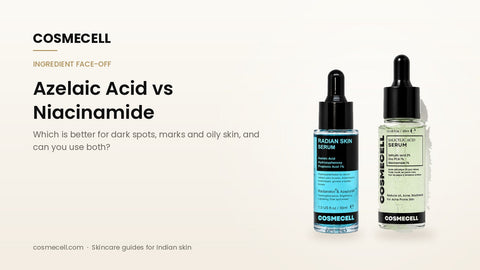
| Azelaic acid | Yes | Vitamin C in the morning, Radiant Skin Serum at night |
| Niacinamide | Yes | Same routine or different times |
| Salicylic or glycolic acid serums | Space out | Use acids at night, vitamin C in the morning |
| Retinol | Space out | Retinol at night only |
Read our vitamin C and salicylic acid layering guide for oily skin, and the dark spot routine order for full layering.
Vitamin C in Indian weather
- Heat and humidity: store your serum in a cool, dark place and close the cap tightly. Avoid leaving it in a hot car or bathroom windowsill.
- Colour change: pure ascorbic acid serums can slowly turn darker yellow as they oxidise. If a serum turns deep orange or brown, replace it.
- Oily skin: choose water-light serums and skip heavy moisturisers on humid days.
- Winter: add a slightly richer moisturiser after your serum. See the winter skincare routine for India.
Who should be careful with vitamin C?
- Very sensitive or reactive skin: start with a stable derivative and use it every other morning. Patch test on the side of your neck for a few days first.
- Skin using strong acids or retinol: keep vitamin C in the morning and those actives at night, and don't add everything in the same week.
- Freshly irritated or sunburnt skin: pause actives until skin feels calm, and focus on moisturiser and sunscreen.
- Pregnancy or a skin condition: vitamin C is generally considered gentle, but check with your doctor before starting new actives.
What to expect
Most people notice that skin looks fresher and brighter within a few weeks of daily use. Tan and dark spots take longer, often 6 to 12 weeks, and only if you wear sunscreen every day. The goal is a brighter, more even-looking version of your own skin tone, not a different shade.
Explore more: dullness and glow · pigmentation and dark spots · vitamin C serum benefits · our ingredient glossary.
Frequently asked questions
Which vitamin C serum is best for Indian skin?
A stable, well-formulated serum at 10 to 15% suits most Indian skin. Pure ascorbic acid is the classic strong option; ethyl ascorbic acid is a gentler, more stable choice for sensitive skin and hot weather. Always pair it with SPF 50.
Should I use vitamin C in the morning or at night?
Morning is best, under sunscreen, because vitamin C's antioxidant support complements SPF during the day. You can use it at night if mornings irritate your skin.
Is 12% vitamin C good for beginners?
Yes, for most skin types. Start every other morning for the first week, then use daily if your skin is comfortable. Very sensitive skin may prefer a stable derivative such as ethyl ascorbic acid.
Can vitamin C serum remove tan?
Vitamin C helps tan and dull skin look brighter over time, especially with a gentle exfoliating cleanser and daily SPF 50. A tan fades gradually as skin renews; there is no overnight fix.
Can I use vitamin C with niacinamide?
Yes. Modern formulas can be used together. If you notice flushing, use them at different times of day.
Why did my vitamin C serum turn yellow?
Pure ascorbic acid oxidises when exposed to air, light and heat. A light yellow tint is common; deep orange or brown means it is time to replace it. Store it in a cool, dark place.
This guide is for general cosmetic skincare information and is not medical advice. Patch test new products. For persistent, spreading or painful skin concerns, see a dermatologist.