Quick answer: azelaic acid is usually the better pick if your main concern is dark spots, acne marks or redness, because it works on several of those at once. Niacinamide is the better pick if your main concern is oiliness, the look of large pores or general dullness, and it is one of the easiest ingredients to tolerate. You don't have to choose: the two work well together, and many routines use niacinamide in the cleanser or morning step and azelaic acid at night.
Niacinamide is India's most searched skincare ingredient, while azelaic acid is the fastest-rising one. So it is no surprise that "azelaic acid vs niacinamide" is one of the most common questions we get. This guide explains what each ingredient does, how they compare for Indian skin, and how to use them together without irritation.
What is azelaic acid?
Azelaic acid is a gentle acid that occurs naturally in grains such as wheat and barley. In skincare, it helps reduce the look of dark spots, post-blemish marks and redness, and it helps keep pores looking clearer. It is light on the skin and suits most skin types, including oily and blemish-prone skin. Some people feel a mild, short-lived tingle in the first week or two.
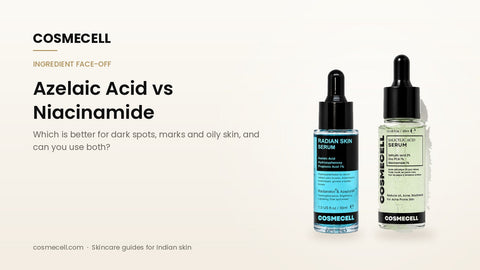
The Cosmecell Radiant Skin Serum combines azelaic acid with 1% HPPA (hydroxyphenoxy propionic acid) and hyaluronic acid. It is dermatologically tested, and with consistent daily use many people see a visibly brighter, more even-looking complexion within about 15 days. Results vary, and deeper marks take longer.
What is niacinamide?
Niacinamide is a form of vitamin B3. It is water-soluble, very easy to formulate and generally well tolerated. It helps reduce the look of shine and visible pores, supports the skin's natural barrier, and helps skin look more even over time. Its effects on established dark spots are more gradual than azelaic acid's, so it works best as a supporting ingredient in a pigmentation routine.
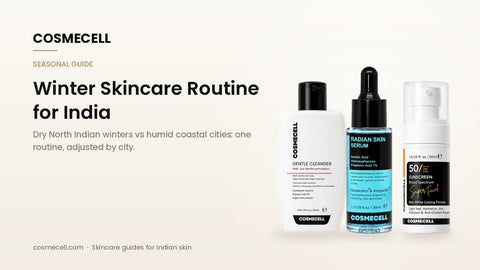
At Cosmecell, you will find niacinamide in the AHA BHA Salicylic Acid Face Wash (3%, with 2% salicylic, 1% mandelic and 3% glycolic acid) and in the 2% Salicylic Acid Serum (1%, with 1% zinc PCA).
Azelaic acid vs niacinamide: side by side
| Azelaic acid | Niacinamide | |
|---|---|---|
| Type | Gentle dicarboxylic acid | Vitamin B3 |
| Best for | Dark spots, acne marks, redness, uneven-looking tone | Oiliness, the look of pores, dullness, barrier support |
| Effect on dark spots | More targeted | Gentler, gradual |
| Effect on oiliness | Helps pores look clearer | Helps reduce the look of shine |
| Feel | May tingle at first | Usually no tingle |
| When to use | Usually at night | Morning or night |
| Good for sensitive skin? | Often, with a slow start | Usually yes |
| Use with vitamin C? | Yes (vitamin C AM, azelaic PM) | Yes |
| Use with salicylic acid? | Yes, on alternate nights | Yes |
Which one should you choose?
Choose azelaic acid if...
- You have brown or dark marks left behind after pimples.
- Your skin tone looks blotchy or uneven, with some redness.
- You get the occasional breakout and want one serum for both marks and clarity.
- You want a gentler alternative to stronger peeling acids.
Choose niacinamide if...
- Your main issue is shine and oiliness by midday, especially in humid cities.
- You want something very easy to start with.
- You want to support your skin barrier while using other actives.
Use both if...
- You have oily, blemish-prone skin and acne marks, which is very common on Indian skin.
How to use azelaic acid and niacinamide together
There is no known clash between the two, so you can use them in the same routine. The easiest approach is to keep them in different steps:
| Time | Routine |
|---|---|
| Morning | AHA BHA Face Wash (with niacinamide) → light moisturiser → SPF 50 PA++++ Sunscreen |
| Night (4 to 5 nights) | Gentle cleanse → Radiant Skin Serum → moisturiser |
| Night (2 to 3 nights) | Gentle cleanse → 2% Salicylic Acid Serum on the T-zone → moisturiser |
Introduce one new product at a time, wait about two weeks, then add the next. If you notice stinging that lasts more than a few minutes, redness or peeling, cut back to every other night.
What about alpha arbutin, kojic acid and vitamin C?
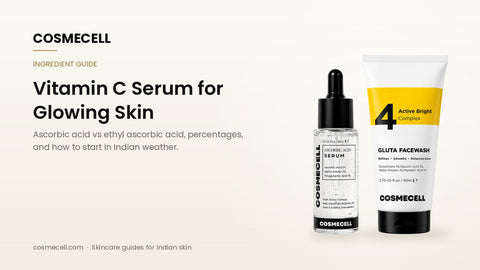
These are other popular choices for dark spots. Alpha arbutin and kojic acid focus on helping dark spots look lighter, while vitamin C is the classic morning brightener for dullness and tan. The Cosmecell Vitamin C Serum 12% combines vitamin C with 2% alpha arbutin. For a full comparison, read the best serum for pigmentation on Indian skin and azelaic acid vs vitamin C.
Why this matters more on Indian skin
Indian skin tones have naturally active melanin, which is beautiful but also means that any irritation, breakout or sun exposure can leave a mark that lingers for weeks. That is why gentle, multi-tasking ingredients are so useful here. Azelaic acid helps with marks and clarity without the peeling of stronger acids, and niacinamide helps keep oiliness and shine in check in humid weather. Used together with daily sunscreen, they cover the two most common concerns we hear from customers across India: oily, blemish-prone skin and the marks it leaves behind.
Realistic expectations
- Weeks 1 to 2: skin may tingle slightly with azelaic acid; oiliness may look a little calmer with niacinamide.
- Around 15 days: with the Radiant Skin Serum used daily, many people notice skin looking brighter and more even.
- Weeks 4 to 12: marks continue to look softer as skin renews, as long as you wear sunscreen every day.
The single biggest factor is daily SPF 50. Without it, new pigment forms faster than any serum can fade it. See our guide to sunscreen for oily skin in India.
Common mistakes
- Layering azelaic acid, salicylic acid and glycolic acid on the same night.
- Expecting niacinamide alone to fade deep marks quickly.
- Stopping azelaic acid in the first week because of a mild tingle (start on alternate nights instead).
- Skipping moisturiser on oily skin, which can make skin feel tight and look shinier.
Shop: blemish-prone skin care · pigmentation and dark spots. For plain-language definitions, see our ingredient glossary.
Frequently asked questions
Is azelaic acid better than niacinamide for dark spots?
For dark spots and acne marks, azelaic acid is usually more targeted. Niacinamide helps too, but more gently and gradually. Many people use both.
Can I use azelaic acid and niacinamide together?
Yes. There is no known conflict between them. Many routines use niacinamide in the morning or in a cleanser, and azelaic acid at night.
Which is better for oily skin, azelaic acid or niacinamide?
Both suit oily skin. Niacinamide is especially helpful for the look of shine and pores; azelaic acid helps pores look clearer and fades the look of marks.
Which should I apply first, azelaic acid or niacinamide?
If you use both in one step, apply the thinner, water-based product first. The simplest option is to use them at different times of day.
Does azelaic acid cause purging?
Azelaic acid can cause a mild tingle in the first week or two. It is not known for strong purging. If you notice ongoing irritation, use it every other night.
How long does azelaic acid take to show results?
With the Cosmecell Radiant Skin Serum used daily, many people see a visibly brighter, more even-looking complexion within about 15 days. Deeper marks take several weeks, and results vary.
This guide is for general cosmetic skincare information and is not medical advice. Patch test new products. For persistent, spreading or painful skin concerns, see a dermatologist.