Quick answer: there is no single "best" serum for pigmentation on Indian skin. The right pick depends on the kind of dark marks you have. For acne marks and blotchy, uneven-looking tone, azelaic acid is usually the most versatile choice. For dullness and tan, vitamin C in the morning works well. For sun spots and stubborn-looking dark spots, alpha arbutin pairs well with either. Niacinamide is a useful supporting ingredient, especially for oily skin. Whatever you choose, daily SPF 50 decides your results.
Searches for dark spot removers in India have grown sharply over the last year, and most shoppers now search by concern and ingredient rather than by brand. That is a good thing, but it also means a crowded shelf of percentages and promises. This guide compares the four ingredients Indian shoppers ask about most, explains which one suits which kind of pigmentation, and shows how to build a simple routine that works in Indian weather.
First, know your type of pigmentation
"Pigmentation" is a catch-all word. On Indian skin, which has naturally active melanin, it usually shows up in one of four ways:
| What you see | Common name | What tends to help most |
|---|---|---|
| Brown or dark marks where pimples used to be | Post-blemish (acne) marks | Azelaic acid at night, SPF 50 |
| Small brown spots on cheeks, nose and forehead | Sun spots / dark spots | Alpha arbutin or vitamin C, plus azelaic acid |
| Overall darker, dull look on exposed areas | Tan | Vitamin C, gentle exfoliating cleanser, SPF 50 |
| Large, symmetrical patches that don't fade | Stubborn patches | See a dermatologist first; cosmetic serums play a supporting role |
If you are not sure which one you have, our guide to pigmentation types explains the differences in more detail.
The four ingredients, compared
| Azelaic acid | Niacinamide | Alpha arbutin | Vitamin C | |
|---|---|---|---|---|
| Best for | Acne marks, redness, uneven-looking tone | Oiliness, the look of pores, overall tone | Dark spots and sun spots | Dullness, tan, glow |
| When to use | Night (or AM under SPF) | AM or PM | AM or PM | Morning, under SPF |
| Feel on Indian skin | Light; may tingle at first | Usually very comfortable | Comfortable | Can tingle; pure ascorbic acid can oxidise |
| Good for oily, blemish-prone skin? | Yes | Yes | Yes | Yes, in light textures |
| Pregnancy-friendly reputation | Often considered gentle; check with your doctor | Generally yes; check with your doctor | Check with your doctor | Generally yes; check with your doctor |
| Cosmecell pick | Radiant Skin Serum (Azelaic Acid + HPPA) | In the AHA BHA Face Wash (3%) | In Vitamin C Serum 12% (2%) | Vitamin C 12% or VC-Peptide Complex |
Azelaic acid: the all-rounder for marks and uneven tone
Azelaic acid is a gentle acid that helps reduce the look of dark spots, post-blemish marks and redness at the same time. That combination is why it is so popular for Indian skin, where breakouts and the marks they leave behind often come together. It is also comfortable for most skin types once your skin gets used to it.
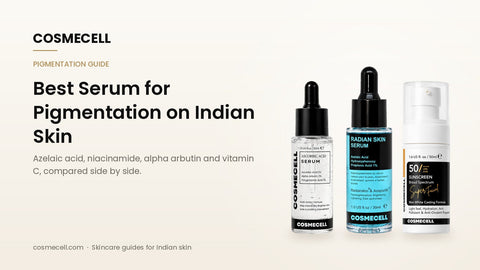
The Cosmecell Radiant Skin Serum pairs azelaic acid with 1% HPPA (hydroxyphenoxy propionic acid) and hyaluronic acid in a light, water-based serum. It is dermatologically tested, and with consistent daily use many people notice a visibly brighter, more even-looking complexion within about 15 days. Deeper marks take longer, and results vary. For a realistic timeline, read how long azelaic acid takes for dark spots.
Niacinamide: the supportive teammate
Niacinamide (vitamin B3) is India's most searched skincare ingredient for a reason: it is easy to use and suits most skin types. It helps reduce the look of shine, visible pores and dullness, and it supports a more even-looking tone over time. On its own, though, it is gentler on established dark spots than azelaic acid or alpha arbutin. Think of it as a supporting player rather than the main fix for pigmentation.
If you have oily skin, an easy way to add niacinamide is through your cleanser and serum: the AHA BHA Salicylic Acid Face Wash contains 3% niacinamide, and the 2% Salicylic Acid Serum contains 1% niacinamide with zinc PCA. Want the full head-to-head? Read Azelaic Acid vs Niacinamide.
Alpha arbutin: targeted help for dark spots
Alpha arbutin is a well-known brightening ingredient that helps dark spots and sun spots look lighter and less noticeable. It is stable, comfortable and works well alongside vitamin C, which is why the two are often combined. The Cosmecell Vitamin C Serum 12% pairs 12% ascorbic acid with 2% alpha arbutin and 1% polyglutamic acid, so you get brightening and spot-focused care in one morning step.
Vitamin C: the morning brightener
Vitamin C is the classic choice for dull, tired-looking skin and tan. Used in the morning under sunscreen, it helps skin look brighter and more radiant. There are two main forms on the Indian market: pure ascorbic acid (strong, but can oxidise and tingle) and stable derivatives such as ethyl ascorbic acid (gentler and longer-lasting). If you are new to vitamin C or have sensitive skin, the VC-Peptide Complex uses stable ethyl ascorbic acid with peptides and is dermatologically tested. Our vitamin C serum guide explains how to choose.
Which serum should you choose?
- Acne marks plus the odd breakout: azelaic acid at night. Add a salicylic face wash if you are oily.
- Tan and dullness after summer or travel: vitamin C in the morning plus a brightening face wash such as the Glutathione Brightening Face Wash.
- Sun spots and scattered dark spots: vitamin C with alpha arbutin in the morning, azelaic acid at night.
- Sensitive skin: start with azelaic acid every other night, or a stable vitamin C derivative. Avoid stacking acids.
- Oily skin in humid cities: water-light serums, a salicylic cleanser and a non-greasy SPF 50.
A simple pigmentation routine for Indian skin
| Step | Morning | Night |
|---|---|---|
| 1. Cleanse | Gentle Glycolic Cleanser or a mild face wash | Same cleanser; double cleanse if you wore makeup |
| 2. Target the concern | Vitamin C Serum 12% | Radiant Skin Serum (start alternate nights) |
| 3. Moisturise | Light gel moisturiser | Moisturiser suited to your skin type |
| 4. Protect | SPF 50 PA++++ Sunscreen, reapplied outdoors | None |
Introduce one new product at a time and give each about two weeks before adding the next. Irritation can leave darker-looking marks on Indian skin, so slow and steady wins.
Why sunscreen matters more than the serum
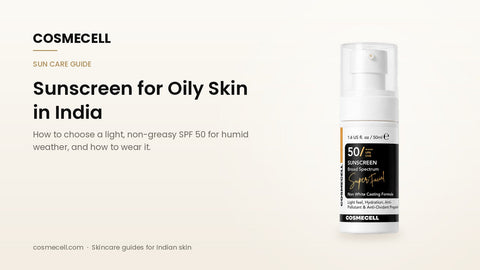
Every pigmentation serum works against the sun. If you skip sunscreen, new pigment keeps forming faster than any serum can fade it. Use about two finger-lengths of SPF 50 PA++++ for your face and neck, and reapply every 2 to 3 hours when you are outdoors. The Cosmecell SPF 50 PA++++ Sunscreen has a lightweight, no-white-cast finish that suits humid Indian weather. See our guide to sunscreen for oily skin in India for application tips.
Common mistakes that make pigmentation look worse
- Using lemon, baking soda or toothpaste on spots.
- Layering azelaic acid, vitamin C, glycolic and salicylic acid all on the same night.
- Picking at pimples, which leaves deeper marks.
- Stopping too soon. Most dark spots need several weeks of consistent use.
- Skipping SPF on cloudy or monsoon days.
Shop by concern
New to these ingredients? Our skincare ingredient glossary explains each one in plain language.
Frequently asked questions
What is the best serum for pigmentation on Indian skin?
It depends on the type of pigmentation. Azelaic acid is the most versatile option for acne marks and uneven-looking tone, vitamin C suits dullness and tan, and alpha arbutin helps dark spots look less noticeable. Many people get the best results using vitamin C in the morning and azelaic acid at night, with SPF 50 every day.
Is azelaic acid or niacinamide better for dark spots?
For established dark spots and acne marks, azelaic acid usually does more. Niacinamide is a gentle supporting ingredient that helps with oiliness, the look of pores and overall tone. They can be used in the same routine.
Can I use vitamin C and azelaic acid together?
Yes. The simplest way is vitamin C in the morning under sunscreen and azelaic acid at night. If your skin is sensitive, start each one on alternate days.
How long does a pigmentation serum take to work?
Skin renews roughly once a month, so most people need several weeks of daily use. With the Cosmecell Radiant Skin Serum, many people see a visibly brighter, more even-looking complexion within about 15 days of consistent daily use. Deeper marks take longer, and results vary.
Which serum is best for pigmentation on oily skin?
Choose light, water-based serums. Azelaic acid and niacinamide both suit oily skin, and a salicylic acid cleanser helps keep pores looking clear. Finish with a non-greasy SPF 50.
Do I still need sunscreen if I use a pigmentation serum?
Yes. Without daily SPF 50, new pigment keeps forming and undoes the work of your serum. Reapply every 2 to 3 hours outdoors.
This guide is for general cosmetic skincare information and is not medical advice. Patch test new products. For persistent, spreading or painful skin concerns, see a dermatologist.