By: Cosmecell
Why Vitamin C Serum Is a Staple, Not a Trend
Vitamin C (ascorbic acid) is one of the most researched actives in skincare, prized for two things: brightening the look of dull, uneven-looking skin and helping defend against the oxidative stress that daily UV and pollution exposure puts on skin. It's not a replacement for sunscreen, but it pairs well with one — more on that below.
The catch is concentration and formulation. A vitamin C serum only does what its label promises if the active is stable, present at a meaningful percentage, and paired with ingredients that support rather than undercut it. That's the detail most generic "glow up" roundups skip.
What's Actually in a Vitamin C Serum — and Why the Percentage Matters
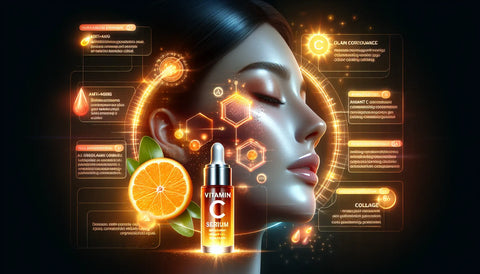
Cosmecell's Vitamin C Serum is formulated at 12% stabilized Ascorbic Acid, paired with 2% Alpha Arbutin and 1% Polyglutamic Acid:
- 12% Ascorbic Acid — a mid-to-high concentration that targets visible brightness without the higher irritation risk that comes with 20%+ formulas, especially useful if you're layering it with other actives like salicylic or glycolic acid.
- Alpha Arbutin 2% — works alongside vitamin C to target the look of uneven tone and dark spots, rather than brightness alone.
- Polyglutamic Acid 1% — a humectant that holds water at the skin's surface, which helps offset the dryness some people notice with straight ascorbic acid formulas.
This combination — rather than ascorbic acid alone — is why concentration alone isn't the whole story. A 20% vitamin C serum with no supporting actives can be harsher on skin than a well-formulated 12% one.
How to Use Vitamin C Serum Correctly
- Cleanse — start with a clean, dry face.
- Apply the serum — a few drops, morning is typical since vitamin C pairs well with daytime UV defense, though it can be used at night too.
- Moisturize — lock in hydration, especially important with an actives-forward formula.
- Sunscreen, always, during the day — vitamin C supports your skin's defense against oxidative stress, it does not replace SPF.
If you're new to vitamin C or have sensitive skin, introduce it gradually — every other day at first — and patch test before applying it to your full face.
What to Expect, and What Not To
Visible brightening and improved tone evenness are the realistic, commonly reported benefits with consistent use. Mild tingling on first use is common with ascorbic acid and usually settles; persistent irritation means the formula or frequency needs adjusting, not pushing through. As with any single active, results vary by skin type, baseline concern and consistency of use — there's no serum that works identically for everyone.
The Takeaway
A vitamin C serum earns its place in a routine through concentration and formulation, not marketing. Cosmecell's version pairs 12% stabilized ascorbic acid with alpha arbutin and polyglutamic acid specifically so the brightening effect isn't working against dry or reactive skin. See the full ingredient breakdown on the product page.