Quick answer: retinol has the stronger evidence for improving the look of fine lines, uneven texture and sun-related ageing, but it can cause dryness, peeling and sensitivity, especially in the first weeks. Peptides are gentler and easy to use morning and night, but their research is smaller and their effects are more modest. For many Indian skin types, a sensible plan is: peptides if you want an easy, low-irritation start or have sensitive-feeling skin; retinol (introduced slowly) if you want the most-studied option and your skin tolerates it; or both, used at different times of day.
This guide compares how each works, what the research actually says, the extra care Indian skin needs with retinol, and how to combine them safely.
What is retinol?
Retinol is a form of vitamin A. In skin it is converted, step by step, into retinoic acid, the form that acts on skin cells. Retinoids as a family are among the most studied ingredients for the visible signs of ageing; a review in Clinical Interventions in Aging summarises clinical evidence that retinoids improve the appearance of photoaged skin, and notes skin irritation as their most common side effect (Mukherjee et al., 2006). Prescription retinoids such as tretinoin are stronger than cosmetic retinol and should only be used under a doctor's advice.
What are peptides?
Peptides are short chains of amino acids, the building blocks of proteins. In skincare, "signal" peptides are designed to mimic fragments that skin uses to communicate. Common examples are palmitoyl tripeptide-1 and palmitoyl tetrapeptide-7 (often sold together as Matrixyl 3000) and copper tripeptide-1 (GHK-Cu).
A 2017 review in Cosmetics summarises small studies in which palmitoyl tripeptide-1 and the tripeptide-1/tetrapeptide-7 combination improved measures such as wrinkle depth and skin roughness, but notes that delivering peptides into skin is still a challenge and some claims rest on manufacturer data (Schagen, 2017). Another review of matrikine peptides concluded that the data are promising but limited, calling for larger trials (Aldag et al., 2016). In short: helpful, gentle, but not as proven as retinoids.
Peptides vs retinol: side by side
| Retinol | Peptides | |
|---|---|---|
| What it is | Vitamin A derivative | Short amino-acid chains |
| Strength of evidence | Strong (retinoid family) | Moderate, smaller studies |
| Visible effects | Smoother texture, softer-looking fine lines, more even-looking tone over months | Smoother, firmer-feeling skin; modest changes in fine lines |
| Irritation | Common at first: dryness, flaking, stinging | Low |
| When to use | Night only | Morning and/or night |
| Sun sensitivity | Skin may feel more sensitive; daily SPF essential | No special concern; SPF still needed |
| Pregnancy / breastfeeding | Avoid unless a doctor advises otherwise | Ask your doctor before starting new products |
| Good for beginners? | Yes, if introduced slowly | Yes |
Why Indian skin needs extra care with retinol
Medium to deep skin tones, common across India, are more likely to develop post-inflammatory hyperpigmentation, dark marks that linger after irritation or breakouts. That matters with retinol, because the redness and peeling of a too-fast start can sometimes leave darker-looking patches. Strong sun and heat can add to the sensitivity.
- Start low and slow: a low-strength retinol two or three nights a week, increasing only if skin feels comfortable.
- Buffer it: apply moisturiser before or after to soften the dryness.
- Skip harsh pairings: don't use retinol on the same night as strong exfoliating acids. See our skin cycling guide for an easy rotation.
- Never skip sunscreen: use a broad-spectrum SPF 50 every morning and reapply outdoors. Read SPF 30 vs SPF 50 in India.
- Pause it before waxing, threading or facial treatments, and around festive or wedding events when you don't want surprise flaking.
Peptides don't carry these concerns, which is why they are often the easier first step for sensitive-feeling skin, very humid or very dry climates, or anyone who has struggled with retinol before.
Which should you choose?
- In your 20s, focused on prevention and glow: sunscreen first, then a peptide or antioxidant serum. Retinol is optional.
- Visible fine lines or rough texture, skin that tolerates actives: a low-strength retinol at night, peptides in the morning.
- Sensitive-feeling or reactive skin: start with peptides and a good moisturiser.
- Pregnant, trying to conceive or breastfeeding: avoid retinol and check with your doctor before starting new products.
Can you use peptides and retinol together?
Yes, and they make a sensible pair: retinol is the well-studied active, and peptides bring a gentle, skin-supporting step that is easy to use daily. The simplest way is to separate them:
| Time | Routine |
|---|---|
| Morning | Cleanse → peptide serum → moisturiser → SPF 50 |
| Night (retinol nights) | Cleanse → retinol → moisturiser |
| Night (rest nights) | Cleanse → peptide or hydrating serum → moisturiser |
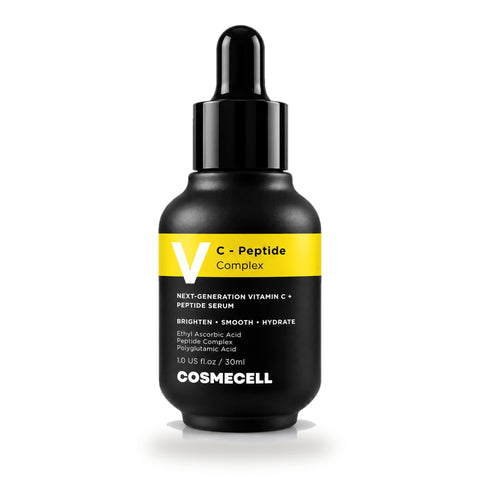
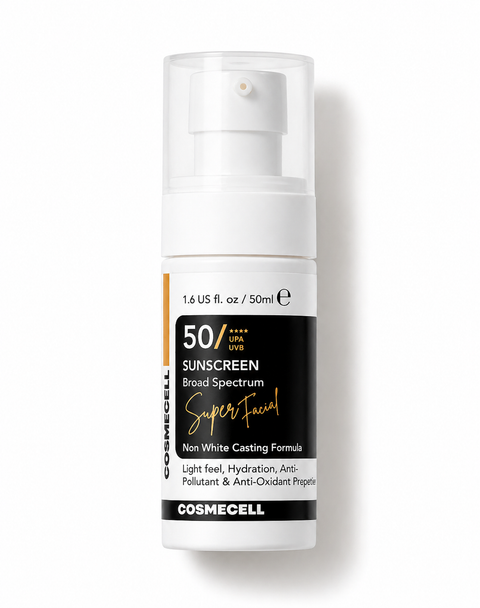
For the morning step, the Cosmecell VC-Peptide Complex combines palmitoyl tripeptide-1 and palmitoyl tetrapeptide-7 with 3-O-ethyl ascorbic acid (a stable vitamin C derivative) and polyglutamic acid, in a lightweight, fragrance-free serum that layers under sunscreen in Indian heat. Then finish with the Cosmecell SPF 50 PA++++ Daily Sunscreen with Copper Peptide, a non-white-casting sunscreen with a hyaluronic acid complex. Want to know more about copper peptides? Read Copper Peptides in Skincare: What They Actually Do.
Cosmecell does not currently make a retinol product, so if you add one, choose a low-strength formula from a brand you trust and follow its label.
Frequently asked questions
Are peptides as effective as retinol?
Not on current evidence. Retinoids have far more research behind them for the look of fine lines and texture. Peptides are gentler and helpful, but their results are usually more modest.
Can I use peptides every day?
Yes. Peptide serums are generally well tolerated and can be used morning and night. Patch test any new product first.
At what age should I start retinol?
There is no fixed age. Many people start in their late 20s or 30s when they notice texture or fine lines. Sunscreen matters more than retinol at any age.
Can I use vitamin C, peptides and retinol in one routine?
Yes, if you split them: vitamin C and peptides in the morning under SPF, retinol at night. A combined vitamin C + peptide serum keeps the morning routine short.
Is retinol safe in Indian summers?
It can be, used at night with daily SPF 50 and reapplication outdoors. If your skin feels very sensitive in peak summer, reduce how often you use it.
Want an easy, low-fuss peptide step for your morning routine? Explore the Cosmecell VC-Peptide Complex.
Sources: Mukherjee S et al. Retinoids in the treatment of skin aging: an overview of clinical efficacy and safety. Clinical Interventions in Aging, 2006. Schagen SK. Topical Peptide Treatments with Effective Anti-Aging Results. Cosmetics, 2017. Aldag C, Teixeira DN, Leventhal PS. Skin rejuvenation using cosmetic products containing growth factors, cytokines, and matrikines. Clinical, Cosmetic and Investigational Dermatology, 2016.
This guide is for general cosmetic skincare information and is not medical advice. Patch test new products. For prescription retinoids, persistent irritation or skin concerns, see a dermatologist.