Copper peptides show up in a lot of skincare marketing copy with a lot of confidence and not much explanation. The copper peptide behind most of these claims is a naturally occurring peptide fragment bound to a copper ion, which your body produces in decreasing amounts as you age. Here's what the actual research says it does, what it doesn't, and where the evidence is thinner than the marketing suggests.
What a copper peptide is
The copper peptide used in skincare is a small tripeptide (three amino acids) that naturally binds copper. It was first identified in human plasma decades ago, and levels of the naturally occurring peptide decline with age, which is the basis for the theory that applying it topically could support some of the skin functions it's associated with. In skincare formulations it's typically included at low percentages alongside other actives rather than as a standalone treatment.
What the evidence actually supports
Collagen and skin structure. Laboratory and review research has linked copper peptides to supporting collagen synthesis and the skin's natural remodeling process. Review papers on the compound describe topical use as associated with firmer, denser-looking skin in the studies they covered.
Fine lines and elasticity. Small human trials, generally run over a few months, have reported softer-looking fine lines and improved elasticity with daily use of copper peptide formulations. These are real, published results, but the sample sizes and durations are modest, which is typical for peptide cosmetic research and worth keeping in mind when a headline calls a peptide a "breakthrough."
Wound healing. Animal studies support the peptide's role in wound healing. This is one of the more mechanistically well-understood effects, though it doesn't automatically translate into a claim about everyday cosmetic use: wound models and intact skin aren't the same thing.
Antioxidant activity. Research has also associated copper peptides with antioxidant activity, with some suggestion of a supportive role against UV-related oxidative stress. That's relevant in a sunscreen formulation, though it is a supporting mechanism rather than a substitute for UV filters.
Where to be cautious
The evidence base for copper peptides is real but limited. Most human studies are small and short (a few months, not years), so there isn't strong long-term data at the timescales people actually use skincare. There's also a documented phenomenon sometimes called "copper uglies," a paradoxical worsening of skin appearance from overuse, theorized to relate to excessive concentrations. This is a reason formulators use copper peptides at controlled, low percentages rather than maximizing the dose, not a reason to avoid a well-formulated product entirely.
Where it fits in a routine
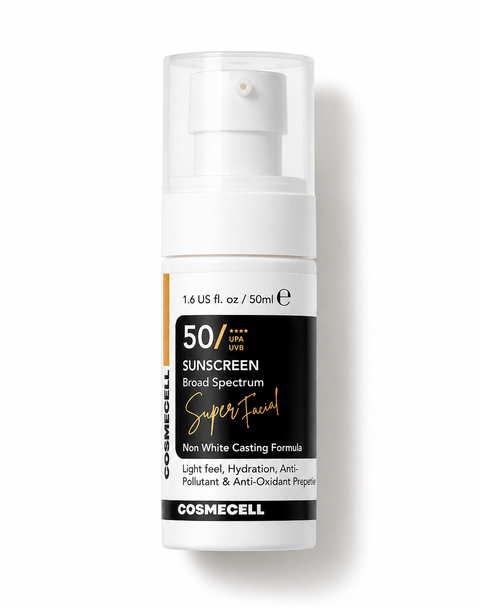
Copper peptides are a supporting ingredient, not a replacement for the two things that do the most measurable work in a skincare routine: consistent broad-spectrum sun protection and a well-tolerated actives routine suited to your skin. Our SPF 50 PA++++ Daily Sunscreen with Copper Peptide pairs zinc oxide and avobenzone UV filters with a copper peptide and hyaluronic acid complex, positioned as the last step of a morning routine rather than a stand-in for retinoids, vitamin C or other actives doing the primary work overnight or earlier in the routine.
Further reading: Innerbody's overview of copper peptide benefits and side effects, and Aesthetic Advice's guide to copper peptides for skin.