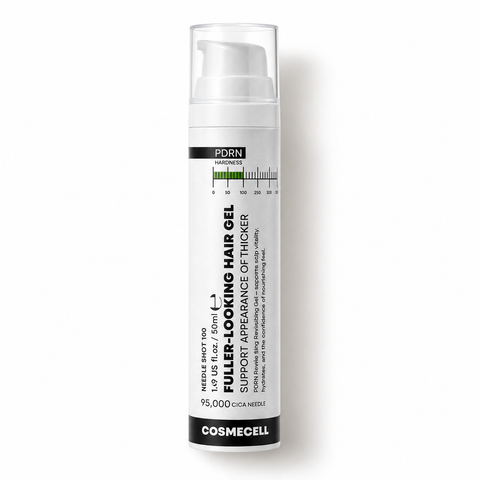
Quick answer: More hair on your comb between November and February is common, and in most people it is temporary. Cold, dry air, very hot showers, less frequent washing and a flaky scalp can all make hair break more and look thinner. A gentle winter routine helps hair look and feel healthier: lukewarm-water washes every two to three days, conditioner on the lengths, less heat styling, and a lightweight scalp-care step such as the Cosmecell PDRN Hair Gel. Sudden, heavy or patchy hair loss is different and needs a dermatologist.
This Cosmecell guide covers what changes for hair and scalp in an Indian winter, from Delhi's cold, smoggy air to dry mornings in Pune and Bengaluru. It is cosmetic hair-care information, not medical advice.
Is winter hair fall real?
Partly. Hair grows in cycles, and at any time some strands are in a resting phase (telogen) before they shed. A six-year study of 823 healthy women, published in Dermatology in 2009, found that the share of resting hairs peaked in July, with a smaller peak in April and the lowest level in February (Kunz et al., 2009). That study was done in Europe, so the timing may not match India exactly. What it does show is that seasonal swings in shedding are normal.
The American Academy of Dermatology notes that losing about 50 to 100 hairs a day is normal (AAD). It also explains that heavier shedding often starts a few months after a trigger such as high fever, illness, childbirth, major stress or crash dieting. If your shedding started this winter, think back to what happened two to three months earlier, including the festive season.
Why hair feels worse in an Indian winter
Hot water and dry air
A very hot bath feels good on a cold Delhi or Lucknow morning, but it strips oil from the scalp and lengths. Hair that is dry breaks more easily when you comb it, so you see more short broken strands on the floor. That is breakage, not hair falling from the root, but it still makes hair look thinner.
Flakes and an itchy scalp
Many people find dandruff flares in the cooler months. The AAD lists ingredients such as zinc pyrithione, salicylic acid, selenium sulfide and ketoconazole in anti-dandruff shampoos and suggests leaving some on the scalp for five to ten minutes before rinsing (AAD). Scratching an itchy scalp also pulls on hair.
Caps, scarves and fewer washes
Woollen caps and mufflers rub against hair and trap sweat and oil. Washing less because it is cold lets build-up sit on the scalp longer, which can make it feel itchy and look flat.
Wedding-season styling
November to February is also peak wedding season, which means more blow-drying, straightening, tight buns and hair spray. Heat and tension both add to breakage.
Winter hair: what you notice and what helps
| What you notice | Likely reason | What helps (cosmetic) |
|---|---|---|
| Short broken strands on the floor | Dry, brittle lengths; heat styling | Conditioner every wash, wide-tooth comb, less heat |
| White flakes and itch | Dandruff flare, infrequent washing | Anti-dandruff shampoo 1–2 times a week, as the label directs |
| Flat, limp roots under a cap | Oil and sweat build-up | Wash every 2–3 days with lukewarm water |
| Hair looks thinner overall | Breakage plus normal seasonal shedding | Gentle handling and a daily lightweight scalp-care step |
| Clumps, patches or a widening parting | Possible medical cause | See a dermatologist |
A simple winter scalp-care routine
Wash days (every 2–3 days)
- Lukewarm, not hot, water. Finish with a cooler rinse if you like.
- Shampoo the scalp, not the lengths. Use an anti-dandruff shampoo once or twice a week if you have flakes.
- Condition the lengths. Mid-lengths to ends, every wash.
- Blot, don't rub. Use a soft cotton T-shirt or microfibre towel, then air-dry or use a cool setting.
Every day, morning and evening
- Scalp-care step: shake the PDRN Hair Gel and apply it directly onto the scalp, parting by parting, then massage it in with your fingertips. The lightweight gel has PDRN, biotin, panthenyl ethyl ether and botanical extracts. It is made to support a healthy-looking scalp and fuller-looking hair, and it does not weigh hair down or leave it greasy.
- Detangle gently: start at the ends with a wide-tooth comb.
- Loose styles: soft scrunchies, loose braids for sleep, and a silk or satin pillowcase if your hair tangles at night.
Patch test any new hair product on a small area behind the ear for 24–48 hours first. Stop if you notice redness, burning or itching.
Curious about the ingredient? Read PDRN skincare explained and PDRN vs exosomes.
Food, sleep and stress
Hair reflects your overall health. Crash diets, low protein and low iron are all linked with more shedding, and festive-season late nights and stress don't help. Eat regular balanced meals with enough protein. If you are tired all the time, have very heavy periods or follow a restrictive diet, ask your doctor whether a blood test makes sense. Don't start iron or other supplements on your own.
When to see a dermatologist
- Hair coming out in clumps, or round bald patches
- A parting or crown that is clearly getting wider
- A red, painful, scaly or oozing scalp
- Shedding that continues for more than about six months
- Hair loss after starting or stopping a medicine (don't stop a prescribed medicine without talking to your doctor)
A dermatologist can tell normal shedding apart from conditions that need medical care, and earlier care generally means better outcomes.
Common winter hair mistakes
- Very hot showers that leave the scalp tight and the lengths brittle.
- Oiling and leaving it in for days when you have dandruff.
- Tight buns and ponytails day after day during wedding season.
- Switching products every week. Hair needs months, not days, to show a change.
Frequently asked questions
Is hair fall more in winter in India?
Many people notice more hair on the comb in the cooler months, but the evidence on seasonal shedding comes mostly from European studies and Indian data are limited. Winter habits such as very hot showers, less frequent washing and a dry, flaky scalp can make hair break more and feel thinner. Shedding that is sudden, heavy or patchy should be checked by a dermatologist.
How many hairs a day is normal to lose?
The American Academy of Dermatology says shedding about 50 to 100 hairs a day is normal. Losing much more than that, or seeing a widening parting or bald patches, is a reason to see a dermatologist.
Should I oil my hair more in winter?
A light pre-wash oil on the lengths can reduce friction and make dry ends feel softer. Leaving heavy oil on the scalp for days is not a good idea if you get dandruff, because the yeast linked to dandruff feeds on scalp oils. Wash it out within a few hours.
Can I wash my hair less often in winter?
You can if your scalp stays comfortable, but skipping washes for too long lets oil, flakes and sweat build up under caps and scarves. Most people do well washing every two to three days with lukewarm water. Oily or flaky scalps usually need more frequent washing.
How long before my hair looks fuller with a scalp-care routine?
Hair grows slowly, roughly a centimetre a month, so give any routine at least two to three months of daily use before judging it. Less breakage from gentler handling shows sooner. Results vary from person to person.
Shop the Cosmecell hair care collection. Related reading: winter skincare routine for India.
This guide is for general cosmetic hair-care information and is not medical advice. Patch test new products. For sudden, heavy or patchy hair loss, or a painful scalp, see a dermatologist.