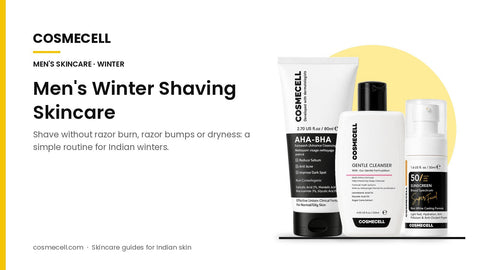
Quick answer: in an Indian winter, shave after a warm-water wash (or right after your bath), use a fresh sharp blade with a cushioning gel, shave with the grain, and follow with a plain fragrance-free moisturiser and SPF in the morning. On non-shave days, use a gentle acid face wash so the beard area stays smooth and fewer hairs get trapped. At Cosmecell, our picks for men who shave are the AHA BHA Salicylic Face Wash (salicylic acid 2%, glycolic acid 3%, mandelic acid 1%, niacinamide 3%) for oily, bump-prone beard areas, the Gentle Glycolic Cleanser (glycolic acid 5% + lactobionic acid 2%) for sensitive skin, and the SPF 50 PA++++ sunscreen every morning. Smoother-looking skin builds over a few weeks; results vary by skin.
This Cosmecell guide is written for Indian men dealing with dry North Indian winters, Bengaluru and Pune cold mornings, and hard water in many cities. It is cosmetic skincare information, not medical advice. If bumps are painful, filled with pus, spreading or leave dark marks that keep growing, see a dermatologist.
Why shaving feels worse in winter
From November, the air in Delhi NCR, Punjab, Lucknow and Jaipur gets dry, and indoor heaters and hot showers pull even more water out of the skin. Dry skin is stiffer, so the blade drags instead of gliding. The result: razor burn (stinging, red-looking patches right after a shave), flaky patches around the jaw and moustache line, and more razor bumps where curly beard hairs curl back into the skin (ingrown-looking hairs). Hard water can add a tight, squeaky feel; see our hard water skincare guide.
Razor burn vs razor bumps vs breakouts: what are you seeing?
| What you see | When it shows up | Usual trigger | What helps (cosmetic) |
|---|---|---|---|
| Razor burn: stinging, red-looking, sore feel | Minutes to hours after shaving | Blunt blade, dry shave, pressing hard, too many passes | Fresh blade, warm-water prep, shave gel, one pass with the grain, fragrance-free moisturiser |
| Razor bumps / ingrown-looking hairs: small bumps, sometimes with a hair visible under the skin | 1–3 days after shaving, mostly neck and jawline | Curly hair cut very short, dead-skin build-up over the follicle | Shave less close, gentle exfoliating face wash on non-shave days, don't pick |
| Breakouts: blackheads, whiteheads, oily spots | Any time, often T-zone and beard area | Oil, sweat under a helmet or mask, heavy creams | Salicylic acid face wash or serum at night; see salicylic acid for blackheads |
| Flaky, tight patches | All day in dry weather | Hot water, harsh soap, no moisturiser | Lukewarm water, gentle cleanser, moisturiser on damp skin |
A winter shaving routine that works for most Indian men
- Prep (1–2 minutes): shave right after a lukewarm bath, or wash your face with lukewarm water. Softened hair cuts more easily, so you need fewer passes.
- Cleanse: on shave days use a mild cleanser; if your beard area is oily and bump-prone, the AHA BHA Salicylic Face Wash works well before shaving as long as your skin is not stinging. Sensitive or dry skin? Use the Gentle Glycolic Cleanser instead, or keep acids for non-shave days.
- Lather: a cushioning shave gel or cream, left on for about a minute. Skip dry shaving and plain soap, which tend to drag.
- Shave: a sharp blade (blunt blades cause more drag), light pressure, with the grain first. Rinse the blade often. If you go against the grain, do it only on areas that rarely get bumps.
- Rinse and pat dry: cool or lukewarm water, then pat with a clean towel. Don't rub.
- Moisturise: a plain, fragrance-free moisturiser on slightly damp skin. Skip alcohol-heavy aftershave splashes in winter; they can sting and dry.
- Protect (morning): SPF 50 PA++++ on face, neck and ears. Freshly shaved skin is more reactive to sun, and winter UVA is still strong in India; see sunscreen in winter.
Cosmecell picks for men who shave
| Product | Key actives | How men can use it | When |
|---|---|---|---|
| AHA BHA Salicylic Face Wash | Salicylic acid 2%, glycolic acid 3%, mandelic acid 1%, niacinamide 3% | Oily, bump-prone beard area; keeps follicles clear-looking | Once a day on non-shave days, or before shaving if skin is comfortable |
| Gentle Glycolic Cleanser | Glycolic acid 5%, lactobionic acid 2%, sugar cane extract | Dry or sensitive skin that still gets rough, bumpy texture | Evening, 3–4 times a week in winter |
| Salicylic Acid Serum 2% | Salicylic acid 2%, zinc PCA 1%, niacinamide 1% | Blackheads and clogged-looking pores on nose, chin and beard line | Night, 2–3 times a week, never on freshly shaved or stinging skin |
| SPF 50 PA++++ Daily Sunscreen with Copper Peptide | Broad-spectrum, copper peptide, no white cast | Daily protection for face, neck, ears; doesn't leave a white beard line | Every morning, top up if outdoors for long |
Start one new product at a time and patch test first. Do not use an acid serum and an acid face wash on the same night, especially on shave days; that is a common route to over-exfoliation.
Beard, stubble or clean shave: what changes?
| Style | Main winter issue | Simple fix |
|---|---|---|
| Clean shave daily | Razor burn, dryness | Shave after a bath, one pass, moisturiser every time; consider shaving every other day |
| Stubble / trimmer | Itchy, flaky skin under the stubble | Trim instead of shaving close; exfoliating face wash 2–3 times a week |
| Full beard | Flaky skin and oiliness under the beard | Wash the beard area properly (not just the hair), moisturise the skin underneath, SPF on exposed skin |
Common mistakes Indian men make in winter
- Very hot water for the shave. It feels good but strips oils; lukewarm is enough to soften hair.
- Same blade for weeks. A dull blade needs more passes and pressure, which means more razor burn.
- Stretching the skin hard and shaving against the grain. Cuts hair below the skin line, so it is more likely to curl back.
- Picking or squeezing bumps. This can leave dark marks that last longer than the bump.
- No sunscreen because "it's winter". Uneven-looking tone along the jaw and cheeks often comes from daily sun plus irritation; see sun spots on face.
Shop by concern: blemish-prone skin care. Full routines: winter skincare routine for India and oily skin routine for India. Ingredient meanings are in the Cosmecell ingredient glossary.
Frequently asked questions
What is the best way for men to shave in winter in India?
Shave right after a lukewarm bath, use a sharp blade and a cushioning shave gel, make one pass with the grain, then apply a fragrance-free moisturiser on damp skin and SPF 50 in the morning. Fewer passes and well-hydrated skin mean less razor burn.
How can I reduce razor bumps on my neck?
Shave less close (a trimmer or a single-blade razor helps), shave with the grain, and use a gentle exfoliating face wash such as Cosmecell's AHA BHA Salicylic Face Wash on non-shave days so dead skin doesn't trap hairs. Don't pick bumps. If they are painful or keep spreading, see a dermatologist.
Can I use a salicylic acid face wash before shaving?
Yes, if your skin is comfortable and not stinging. Many men with oily, bump-prone beard areas use it before shaving. If you are dry or sensitive in winter, use it on non-shave days instead and keep shave days simple.
Should men use sunscreen after shaving?
Yes. Freshly shaved skin is more reactive to the sun, and UVA reaches Indian cities through winter haze. A broad-spectrum SPF 50 PA++++ with no white cast, like Cosmecell's SPF 50 with copper peptide, works on face, neck and ears every morning.
Is aftershave with alcohol bad in winter?
Alcohol-heavy aftershave splashes can sting and dry out skin that is already dry in winter. A plain, fragrance-free moisturiser after shaving is usually more comfortable.
How long before shaving bumps look better?
With gentler shaving and regular exfoliation on non-shave days, most men see smoother-looking skin over a few weeks; results vary by skin and hair type.
Are Cosmecell products vegetarian?
Yes. The full Cosmecell range is vegetarian.
This guide is for general cosmetic skincare information and is not medical advice. Patch test new products. For persistent, spreading or painful skin concerns, see a dermatologist.